



In the early weeks of 2026, the conversation around AI in education has shifted from skepticism to strategic adoption. We are no longer simply asking if AI belongs in the classroom; we are discovering how it can fundamentally bridge the gaps that traditional systems have left open for decades. At DXTech, our mission as a Top AI Builder has always been to move beyond the hype of generic chatbots and focus on Human-Centered AI solutions that solve real-world psychological and pedagogical barriers.
While the world was captivated by the text-generation capabilities of ChatGPT, a quieter, more profound revolution was taking place in the background, one that addresses the “silent” struggles of students and the complex needs of modern learning.
1. The Invisible Barrier: Why "Smart" Kids Still Struggle to Learn


Before diving into the tools, we must address a critical pain point that many parents and educators overlook: Psychological Safety. Even in the most supportive classrooms, many students suffer from the fear of “looking stupid.” This internal anxiety creates a phenomenon known as “the silent struggle.” A student misses a foundational concept in mathematics but is too embarrassed to raise their hand. This gap in understanding then compounds over time, leading to a loss of confidence and eventually, a total disengagement from the subject.
Traditional education is often high-stakes and social, which is excellent for community building but detrimental for students who need to fail privately before they can succeed publicly. According to research on the “Protégé Effect” and learner psychology, students often perform better when they feel they are in a “judgment-free” zone. This is where AI—specifically when designed as a companion rather than just a search engine—changes the game. At DXTech, we believe that the true power of learning technology lies in its ability to provide a safe space for curiosity to flourish without the fear of social repercussion.
2. The Current Landscape: 5 AI Tools Redefining the Classroom
To understand where the future is headed, we must look at the leaders currently paving the way. These tools have moved beyond simple “answer-giving” and are focusing on the learning process itself.
I. Khan Academy (Khanmigo): The Socratic Tutor
Khanmigo is perhaps the gold standard for AI in education. Unlike a standard chatbot that simply gives a student the answer to a math problem, Khanmigo acts as a Socratic tutor. It asks guiding questions, provides hints, and encourages the student to find the solution themselves.
- The Business Impact: This shifts the teacher’s role from a primary lecturer to an orchestrator. By handling the foundational “remedial” questions, the AI allows the human educator to focus on higher-level critical thinking and emotional support.
II. Duolingo (Max): Roleplaying for Fluency
Language learning has always been hindered by the “fear of speaking.” Duolingo Max utilizes AI to create immersive roleplay scenarios. A student can practice ordering a coffee in Paris or interviewing for a job in Tokyo with a patient, non-judgmental AI partner.
- The Educational Value: It eliminates the “performance anxiety” that prevents many adult and child learners from ever achieving true fluency.

III. Quizlet: The Master of Retrieval Practice
Quizlet has evolved from simple digital flashcards into an AI-powered engine that utilizes spaced repetition and active recall. Its AI can transform a student’s disorganized notes into a structured study path, identifying exactly which concepts the student is struggling with.
- Scientific Foundation: This leverages the Testing Effect, a psychological phenomenon where the act of being tested on information actually helps the brain retain it better than simple re-reading.
IV. Elsa Speak: Precision in Pronunciation
For millions of English language learners, pronunciation is a massive barrier to career and social advancement. Elsa Speak uses specialized speech-recognition AI to give instant, granular feedback on sounds—down to the placement of the tongue and the flow of the breath.
- The User Pain Point: It provides the high-frequency feedback that a human teacher simply wouldn’t have the time to give to 30 different students simultaneously.
V. The Rise of Physical AI Companions (The DXTech Perspective)
While the tools above are revolutionary, they share a common limitation: they are screen-based. In 2026, we are seeing a growing concern among parents regarding “Screen-Time Fatigue.” This is where the next evolution of education begins—moving AI from the flat screen into the physical world.

3. Bridging the Screen-Gap: Why Physicality Matters
At DXTech, we have spent months analyzing how children interact with technology. We’ve found that while a tablet can be a powerful window into information, it is also a gateway to distraction. A student who opens a device to study on Khan Academy is only one tap away from YouTube or TikTok. Furthermore, the physical act of “looking down” at a screen is a passive posture.
The “Alexa” for Education: A Non-Judgmental Presence
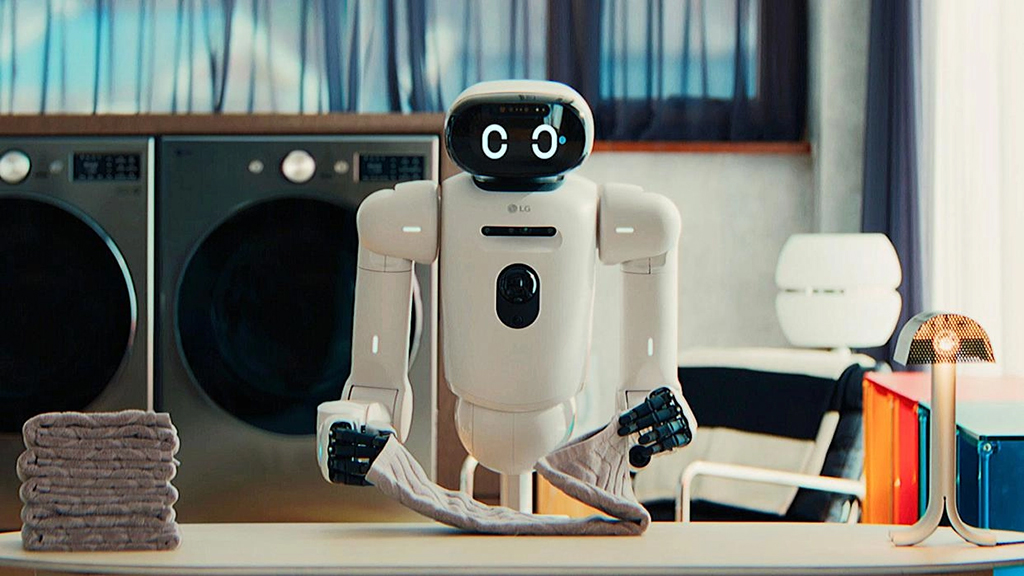
Imagine a device that sits on a child’s desk. It doesn’t have a screen to distract them, but it has the intelligence of the world’s best tutors. This is the concept of the Physical AI Learning Companion.
- Voice-First Learning: By using voice as the primary interface, we encourage verbal expression and active listening. This is particularly vital for younger children developing their linguistic and social-emotional skills.
- The Emotional Connection: A physical object—a friendly, mini-robot or a smart “learning hub”—creates a sense of companionship. It feels less like an “app” and more like a study buddy.
When a child feels comfortable saying, “Hey, I don’t understand what a fraction is, can you explain it differently?” to a physical device on their desk, they are engaging in a vulnerable, high-value learning moment. They aren’t “using a tool”; they are having a conversation. At DXTech, we are focusing on this exact intersection: where high-level AI meets low-friction, physical interaction.


4. Addressing the "Hallucination" and Safety Concerns
A major pain point for businesses and parents is the reliability of AI. We have all heard stories of AI “hallucinating” or providing incorrect information. In an educational context, this is unacceptable.
The DXTech Modular Approach to Accuracy
To solve this, Top AI Builders like DXTech are moving away from “General-Purpose AI” and toward Modular Knowledge Graphs. Instead of letting an AI search the entire, unverified internet for an answer, we “ground” the AI in verified educational curricula.
- Fact-Check Layers: Every response given to a student passes through a secondary “Fact-Check” layer.
- Safe-Search Guardrails: The AI is programmed to recognize sensitive topics and either redirect the student or provide a neutral, age-appropriate explanation that encourages them to talk to a human parent or teacher.
This level of precision is what differentiates a “toy” from a “tool.” Business leaders looking to invest in EdTech must prioritize these “safety-by-design” architectures.
5. The Future: AI as the "Mission Control" for the Human Brain
The ultimate goal of these tools is not to replace the teacher, but to provide them with better “data-driven empathy.” When a child uses an AI companion, the system is silently mapping their progress. It knows that the child is excellent at logic but struggles with reading comprehension.
Empowering the Teacher
The data from these learning companions can be fed back to the teacher in a “Mission Control” dashboard. Instead of spending hours grading 30 identical worksheets, the teacher receives a report: “Student A is struggling with division; Student B is ready for advanced geometry.” This allows for Surgical Intervention—the human teacher spends their time exactly where it is needed most.
Empowering the Parent
For parents, this technology provides peace of mind. You no longer have to be an expert in 10th-grade chemistry to help with homework. The AI handles the technical explanation, while you provide the encouragement and the big-picture context.


Reclaiming Curiosity with DXTech
As we navigate the complexities of 2026, the most successful organizations and families will be those who see AI not as a replacement for human effort, but as a bridge for human curiosity. We must move past the fear of “short-cuts” and realize that by automating the routine, we are freeing the human mind for the creative, the empathetic, and the complex.
At DXTech, we are committed to building the next generation of Physical AI Companions—devices that don’t just “give answers,” but foster the confidence to ask better questions. We believe that when a child has a patient, intelligent, and non-judgmental partner on their desk, the “silent struggle” ends, and the real journey of learning begins.
Is your organization ready to lead the next wave of AI-native education? Whether you are looking to integrate AI into your B2C product or seeking a hardware-software partner for the classroom, DXTech is here to help you build a smarter, more human future. Contact us today to explore the possibilities.